Bringing Stroke Care to Every Patient
I was invited to the kickoff of ARPA-H's AIR program: up to $175.3 million for autonomous robotic surgery in stroke care.
I was invited to the kickoff for Advanced Research Projects Agency for Health (ARPA-H)'s AIR program. Up to $175.3 million, focused on autonomous robotic surgery for stroke care. One of the most exciting programs I've seen.
Early on in my career, I had the privilege of doing some work in collaboration with the Walter Reed National Military Medical Center. That's where I first began to understand the stroke community and the care pathway. I watched what happens when a large vessel occlusion hits and the patient is too far from a center that can treat it. The clot sits there. Brain tissue dies. Every 10 minutes of delay adds 39 days of disability and roughly $10,000 in costs. And half of Americans live more than an hour from an advanced care center.
The procedure that saves these patients is called a thrombectomy. It works. But only about 12% of the people who need one actually receive it. Hundreds of thousands of strokes from large vessel occlusions happen every year in this country, and the vast majority go untreated because the infrastructure and the specialists simply aren't where the patients are.
That's the problem I've carried with me from the lab into venture capital.
AIR stands for Autonomous Interventions and Robotics. I spent the day with the performer teams and the ARPA-H team. The technical areas are ambitious in the right way. TA1 is building endovascular robotics that can perform curative stroke surgery and reach vessels that are incredibly difficult to access today. TA2 is developing microbots for safer, more accessible procedures. The performer teams include Siemens Healthineers, Philips, Magnendo Corp., UC San Diego, Kitware Inc., Stanford University, and University of California, Berkeley. These are serious groups working on problems that matter.
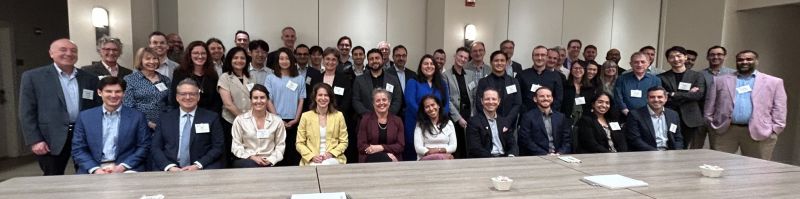
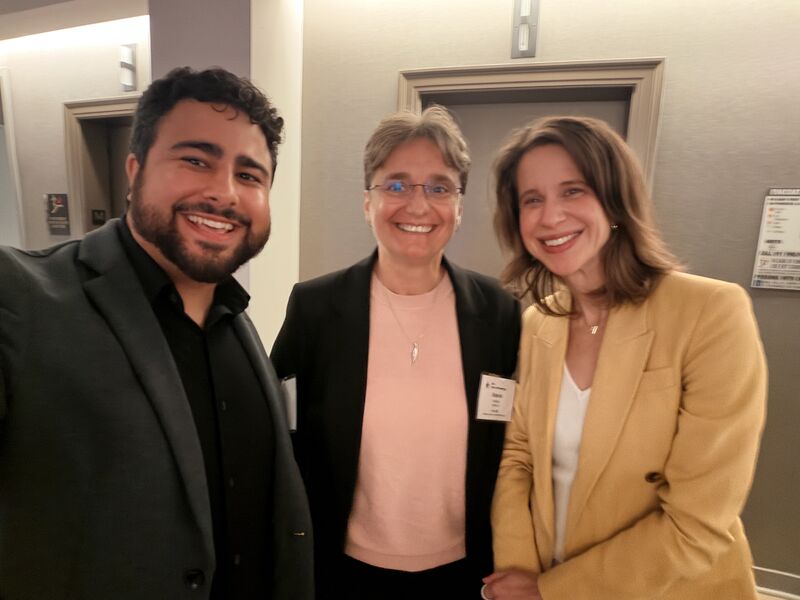
I caught up with Alicia Jackson and Ileana Hancu, who manages the AIR program. The conviction in the room was real. These aren't people chasing a trend. They're building toward a future where a stroke patient in rural America has the same shot as someone who lives next to Mass General.
This is the kind of work that made me want to be a scientist in the first place. And it's the kind of work that keeps me in this business.
We need more of this. Much more.
Originally posted on LinkedIn.