Measuring the Fatigue Patients Feel
A regulatory milestone for Critical Path Institute, and a huge win for the 1.3 million Americans living with rheumatoid arthritis.
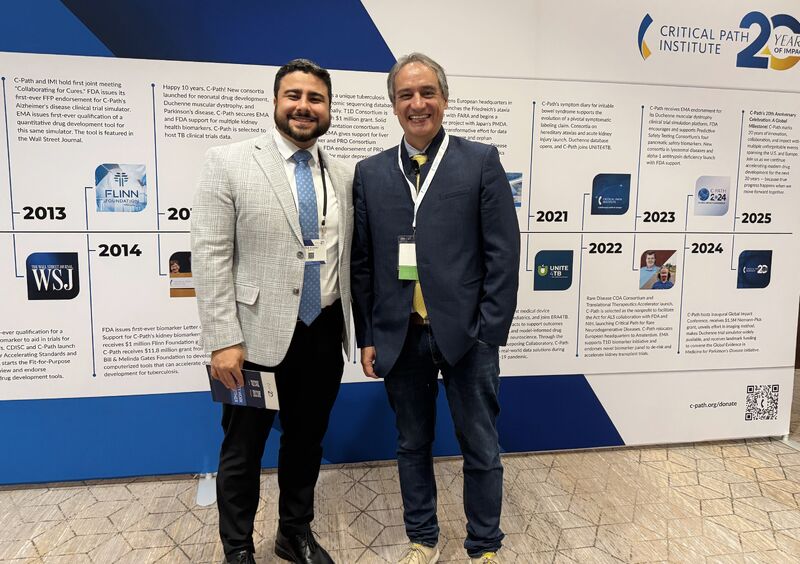
Fresh off the presses, a special regulatory milestone for Critical Path Institute (C-Path): our sixth qualified outcome assessment, and the first one supported by longitudinal data showing meaningful within-patient improvement over time. And a huge win for patients.
More than 1.3 million Americans live with rheumatoid arthritis. I have close friends who deal with it every day. When I ask them what the hardest part is, the answer is almost never the joint pain. It's the fatigue. The kind of exhaustion that doesn't go away with rest, makes an ordinary afternoon feel impossible, and stays invisible to everyone around them.
For decades, that fatigue has been one of the hardest symptoms to measure in a clinical trial. It fluctuates, it's subjective, and regulators haven't had a qualified tool to assess whether a drug actually improves it over time. So it gets sidelined. Sponsors design trials around endpoints they can defend, not necessarily what patients care about most.
That changes now.
The FDA just qualified the PROMIS Fatigue Short Form 10a as a clinical outcome assessment for fatigue in adults with rheumatoid arthritis. This came out of the Patient-Centered Evidence Consortium at Critical Path Institute, where I'm proud to serve on the Board of Directors.
The practical impact for drug developers is massive: When an outcome assessment is FDA-qualified, sponsors can reference it in future IND discussions without generating that evidence from scratch. That saves millions in trial costs and years of redundant work. More importantly, it means the symptom patients rank as most debilitating finally has a rigorous, accepted way to drive approval decisions.
This took years of pre-competitive collaboration across the FDA, Eli Lilly and Company, Northwestern University, patient advocates, and C-Path. That kind of shared infrastructure doesn't get built by a single company. It happens when competitors agree that certain foundational problems are worth solving together.
Huge milestone for the team, the consortium, and most of all, the patients living with RA. Proud to support this work from the board.
Originally posted on LinkedIn.